This imarku santoku knife review looks at a seven-inch kitchen knife designed for everyday chopping, slicing, dicing, and mincing. Its stainless-steel blade and Pakkawood handle make it a fit for cooks seeking a versatile prep knife.
imarku Santoku Review Summary
The quick verdict
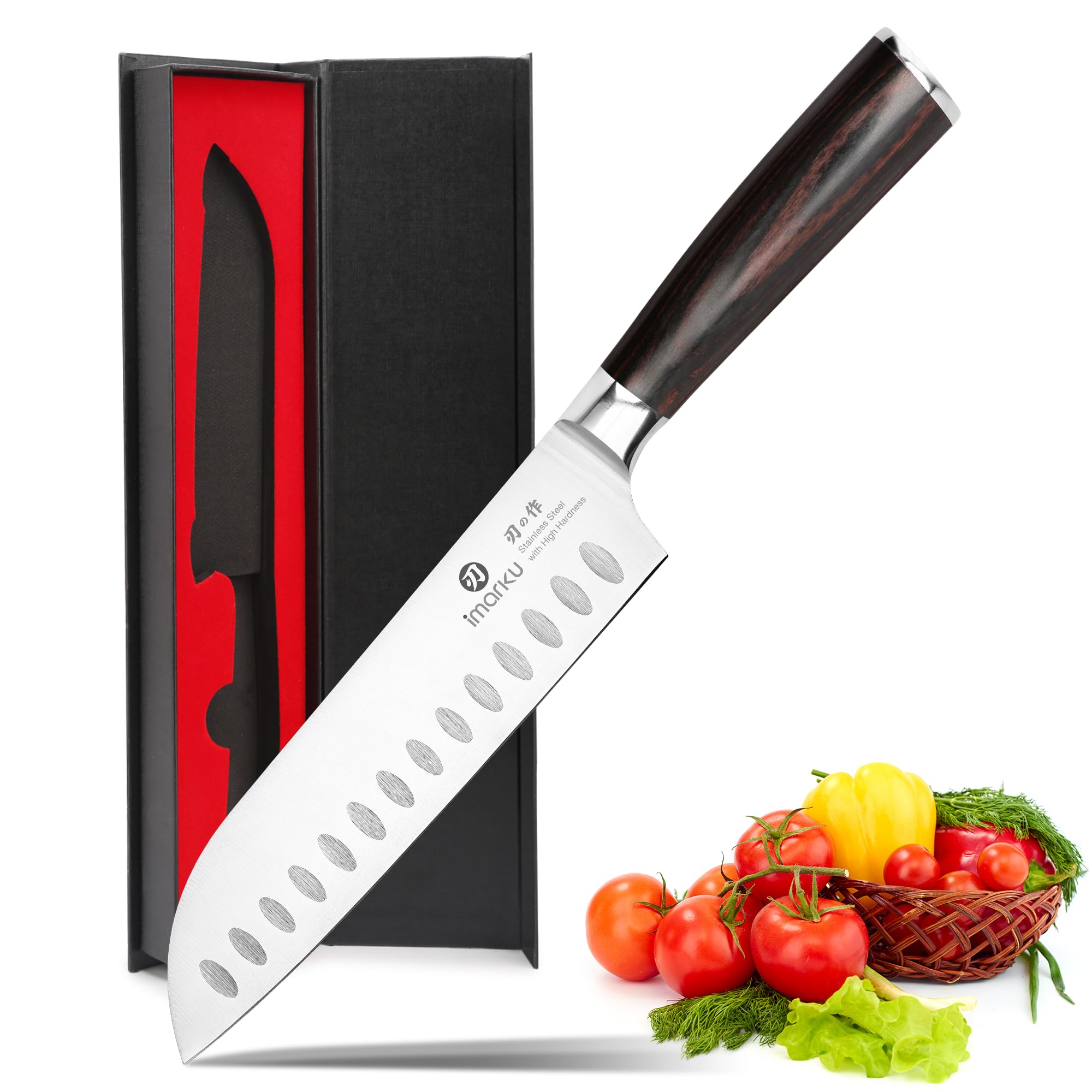
6,000+ ratings
Read Amazon Reviewsimarku Santoku Knife
A versatile home-prep santoku with a hollow edge and Pakkawood handle, suited to cooks who want one knife for everyday slicing and chopping.
- Seven-inch santoku blade for everyday kitchen preparation.
- High-carbon stainless steel described as resistant to rust, corrosion, and discoloration.
- Scalloped hollow edge intended to reduce food sticking during slicing, dicing, and mincing.
- Hand-polished edge specified at 15-18 degrees per side.

Pros
- Handles a range of common prep tasks across meat, vegetables, fruit, and bread.
- Hollow scallops are designed to help limit food sticking to the blade.
Consider before buying
- A hollow edge can help with food release, but it does not remove the need to clean and maintain the blade after prep.
- The available design details do not establish whether the knife is dishwasher-safe, so check care instructions if dishwasher cleaning matters to you.
Read the full review summary
The imarku combines a seven-inch blade with a scalloped hollow edge intended to leave gaps between the blade and food.
That design may help when slicing or dicing ingredients that tend to cling, while the high-carbon stainless steel is described as resistant to rust, corrosion, and discoloration.
It suits home cooks who want one knife for produce, meat, fruit, and bread preparation, and who prefer a shaped Pakkawood handle.
The specified 15-18-degree-per-side hand-polished edge is a useful detail for buyers comparing knife geometry, though edge performance will still depend on upkeep and the food being cut.
The buying factors
imarku Santoku Scorecard
Editorial scores reflect listed features and buyer fit; they are not laboratory measurements or customer ratings.
Everyday versatility
The knife is intended for chopping, slicing, dicing, and mincing a range of foods, making it adaptable to routine meal preparation.
Blade length
The seven-inch santoku blade gives buyers a defined mid-size format for kitchen prep.
Food-release design
Scallops along the hollow edge are intended to create space between blade and food, which may reduce sticking during slicing and dicing.
Steel material
High-carbon stainless steel offers a material choice with stated resistance to rust, corrosion, and discoloration.
Edge geometry
The hand-polished edge is specified at 15-18 degrees per side, a concrete specification for buyers considering edge angle.
Handle design
The Pakkawood handle is designed for a secure grip and to minimize wrist tension, but those comfort benefits depend on the individual user.
Key Features and Specifications of imarku Santoku
- Seven-inch santoku blade for everyday kitchen preparation.
- High-carbon stainless steel described as resistant to rust, corrosion, and discoloration.
- Scalloped hollow edge intended to reduce food sticking during slicing, dicing, and mincing.
- Hand-polished edge specified at 15-18 degrees per side.
- Pakkawood handle designed for a secure, comfortable grip.
- Presented in a black gift box.
Pros and Cons of imarku Santoku
Pros
- Handles a range of common prep tasks across meat, vegetables, fruit, and bread.
- Hollow scallops are designed to help limit food sticking to the blade.
- Pakkawood handle is designed to provide a secure grip while minimizing wrist tension.
- Suitable in concept for both home and restaurant kitchens.
Consider before buying
- The available design details do not establish whether the knife is dishwasher-safe, so check care instructions if dishwasher cleaning matters to you.
- A hollow edge can help with food release, but it does not remove the need to clean and maintain the blade after prep.
Who Should Buy imarku Santoku?
Good fit
Choose it if you want a single santoku for routine chopping, slicing, dicing, and mincing across produce, meat, fruit, and bread. The seven-inch blade and hollow-edge design make the intended role clear for general meal prep.
It is also worth considering if a Pakkawood handle and a specified hand-polished edge angle matter to your choice.
The handle is designed to feel secure, while the 15-18-degree-per-side edge provides a defined geometry to compare with other knives.
Who should skip it
Consider another option if you need a knife with a supplied blade guard for drawer storage or transport; this 7-inch Santoku has a hollow edge designed to help keep food from sticking while slicing, dicing, and mincing.
Consider another style if you specifically want a non-scalloped blade profile. This knife's hollow scalloped edge is a defining part of its food-release design.
imarku Santoku: What Matters in Daily Prep
Blade shape and food release
The scalloped hollow edge is the knife's most distinctive practical feature: the gaps are meant to keep ingredients from sticking as you slice, dice, or mince.
That can be useful in repeated prep, though it should be treated as a design aid rather than a guarantee that every ingredient will release cleanly.
Steel and edge angle
High-carbon stainless steel is specified, along with resistance to rust, corrosion, and discoloration.
The hand-polished edge angle is 15-18 degrees per side; buyers should view these as material and geometry details, not a substitute for proper sharpening and care.
Grip and handling
The Pakkawood handle is shaped around a secure grip and reduced wrist tension.
Handle comfort varies by hand and technique, so shoppers who are particular about balance or grip shape may want to compare the profile in person when possible.
A versatile kitchen role
The intended task list spans chopping, slicing, dicing, and mincing vegetables, fruit, meat, and bread.
That broad role makes the imarku a plausible everyday prep option; cooks who rely on specialized cuts or a different blade profile should make sure a santoku matches their routine.
Alternatives to imarku Santoku
Santoku Knives alternative
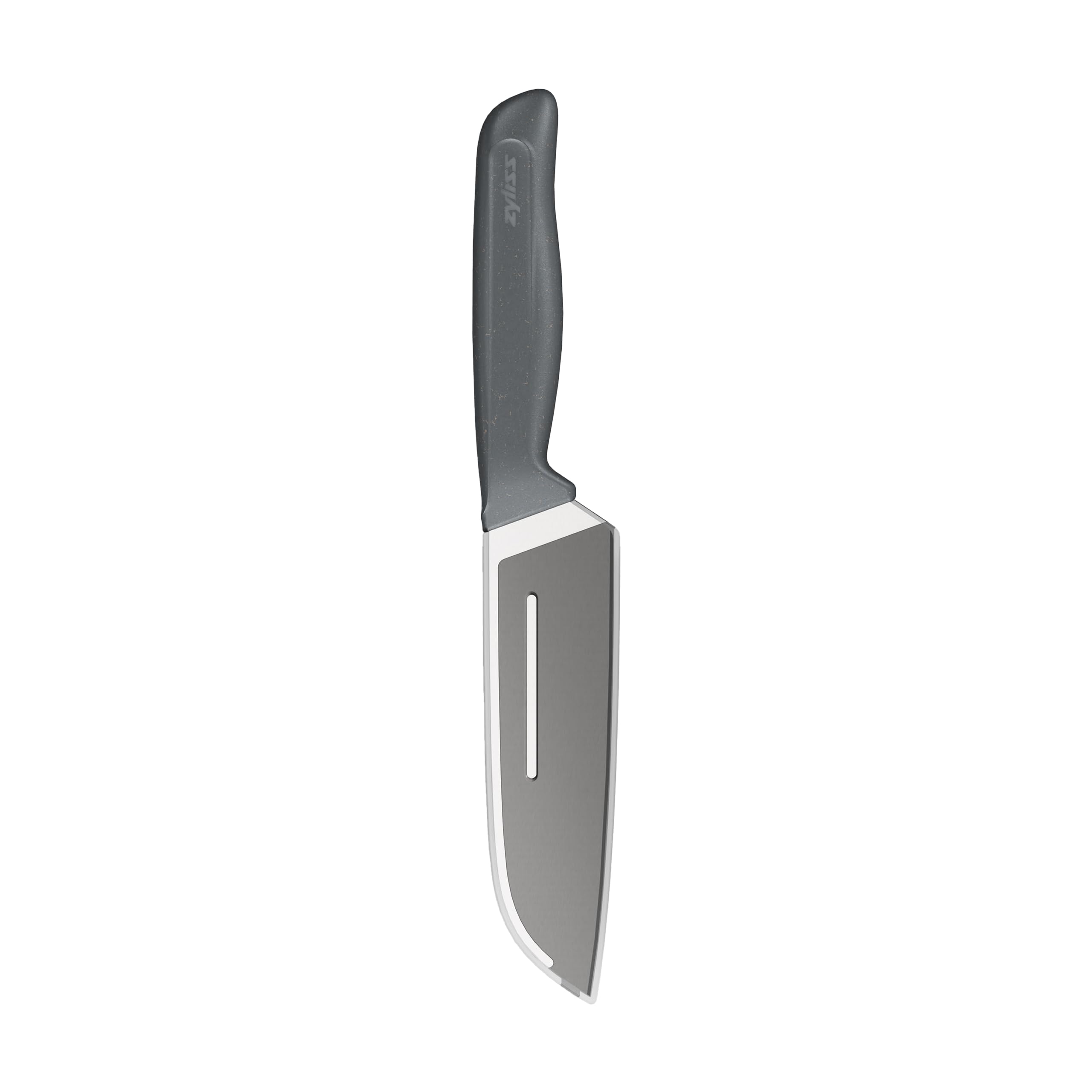
1,000+ ratings
Read Amazon ReviewsZyliss Comfort Santoku Knife
Choose the imarku for its longer seven-inch blade and hollow-edge design; choose the Zyliss if a blade guard for storage or a non-slip handle for wet-hand control better suits your kitchen routine.
- The Zyliss is a 5.9-inch santoku with a blade guard for camping or drawer storage and a non-slip contoured handle intended to provide control with wet hands.
- The imarku has a seven-inch blade with a scalloped hollow edge intended to keep food from sticking, and a Pakkawood handle designed for a secure grip.
Santoku Knives alternative
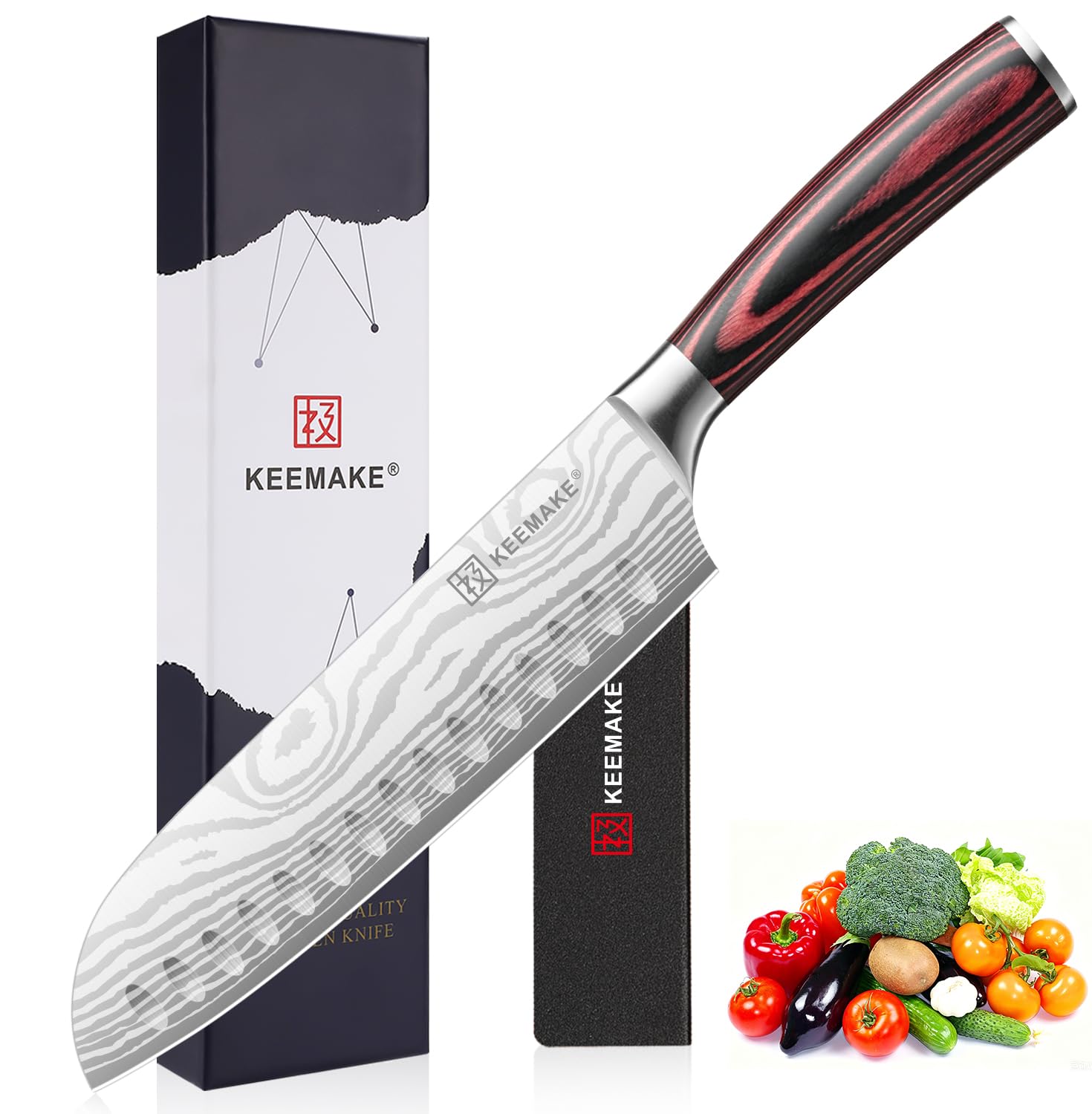
600+ ratings
Read Amazon ReviewsKEEMAKE 7" Santoku Knife
Choose the imarku if its scalloped hollow edge and 15-18-degree-per-side specification match your preferences. Consider the KEEMAKE if you want its flatter push-cutting profile and hand-sharpened 12–15°-per-side edge.
- The KEEMAKE has a hand-sharpened 12–15°-per-side edge and a wave-patterned blade intended to reduce food sticking; its flatter edge supports push cutting.
- The imarku has a hand-polished 15-18-degree-per-side edge and a hollow scalloped blade intended to help reduce sticking.
Is imarku Santoku Worth It?
The imarku Santoku Knife is worth considering for home cooks who want a seven-inch all-purpose prep knife with a hollow scalloped edge and Pakkawood handle.
Its broad task range and defined edge angle give buyers useful points to assess against their own cooking habits.
Buy it if you want a 7-inch santoku for everyday chopping, slicing, dicing, and mincing, with a scalloped hollow edge to help keep food from sticking.
Look elsewhere if you need a blade guard or a non-scalloped edge; check care instructions if dishwasher use matters to you.
Your review at a glance
6,000+ ratings
Read Amazon Reviewsimarku Santoku Knife
A versatile home-prep santoku with a hollow edge and Pakkawood handle, suited to cooks who want one knife for everyday slicing and chopping.
- Seven-inch santoku blade for everyday kitchen preparation.
- High-carbon stainless steel described as resistant to rust, corrosion, and discoloration.
- Scalloped hollow edge intended to reduce food sticking during slicing, dicing, and mincing.
- Hand-polished edge specified at 15-18 degrees per side.